
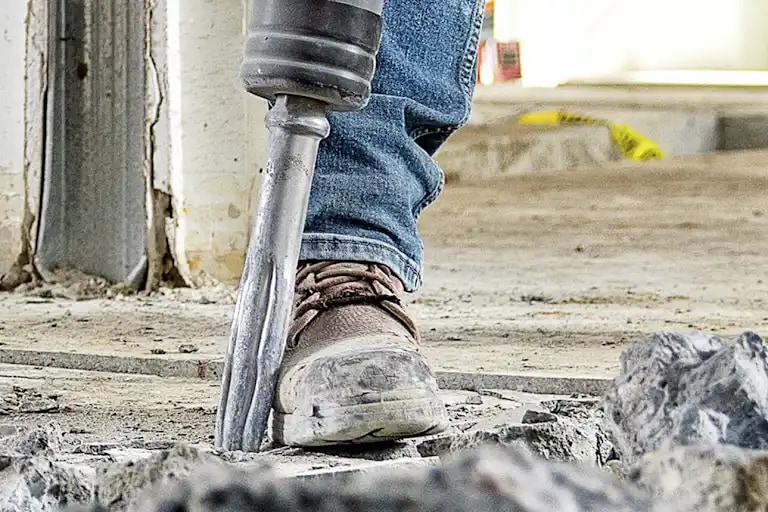
Make an impact
Demolition
Hilti FlatPoint chisels: Faster breaching and breaking with more control and virtually no jamming.
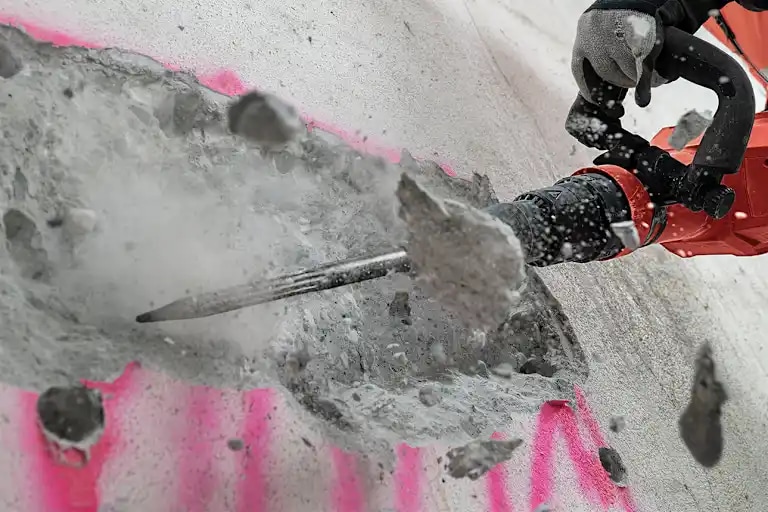
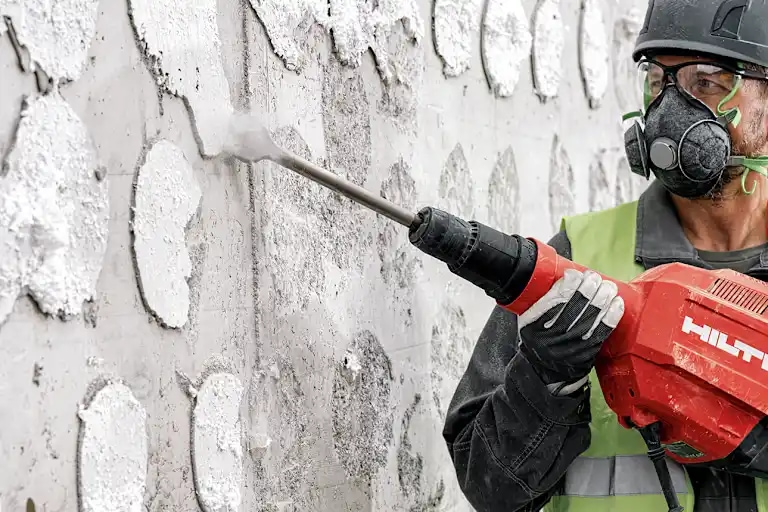
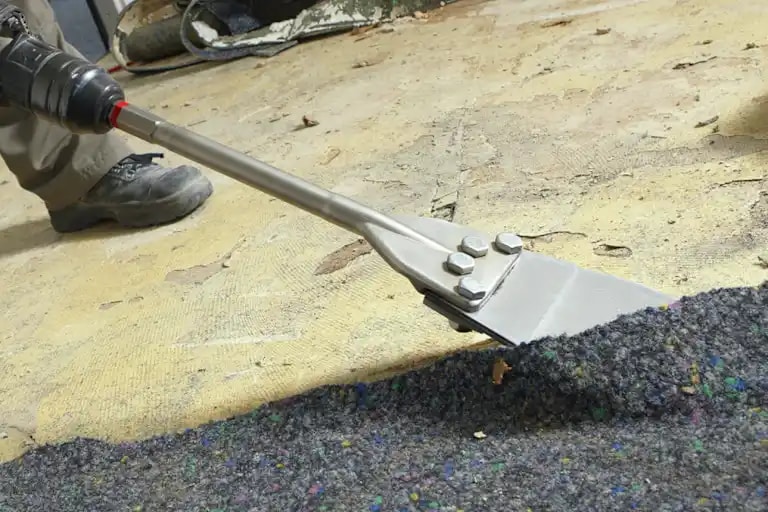
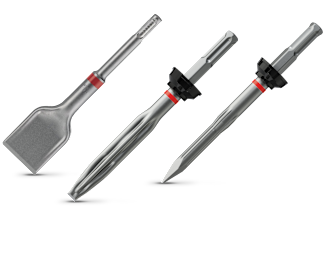

Each chisel is designed for a specific job, helping crews work faster, reduce jamming, and a longer life.

Every Hilti chisel is designed, tested, and manufactured in-house to help reduce wear and keep work moving.

Hilti chisels are built to resist wear, mushrooming, and breakage using higher-grade steel and inductive hardening.
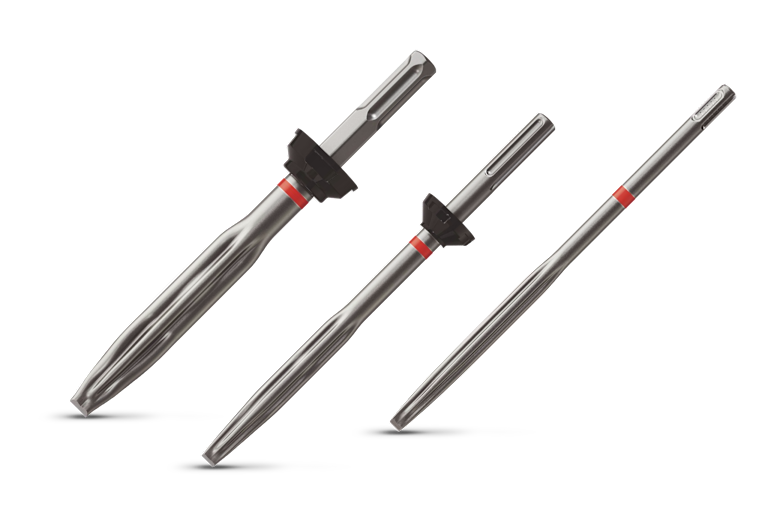
Break through concrete without switching chisels. Choose our FlatPoint chisels to combine the control of a flat chisel with the breaking speed of a pointed chisel, so you can keep working with the same chisel from start to finish.
The tips, ribs, and sides crack concrete fast. Straight edges and dust channels help prevent jams. The hardened profile holds up, so you spend less time resharpening and more time getting the job done.
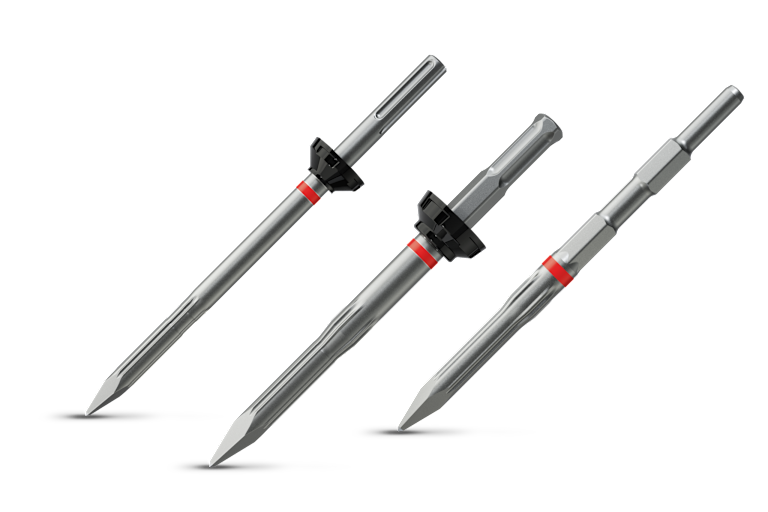
Bullpoint chisels come with a sharp tip that cuts through walls and surfaces fast. They hold up to tough rebar work, and the dust channels help keep you moving by cutting down on jams.
When the tip gets dull, grab an angle grinder, sharpen it right on site, and be back to work in minutes. No waiting around, and virtually no performance loss.
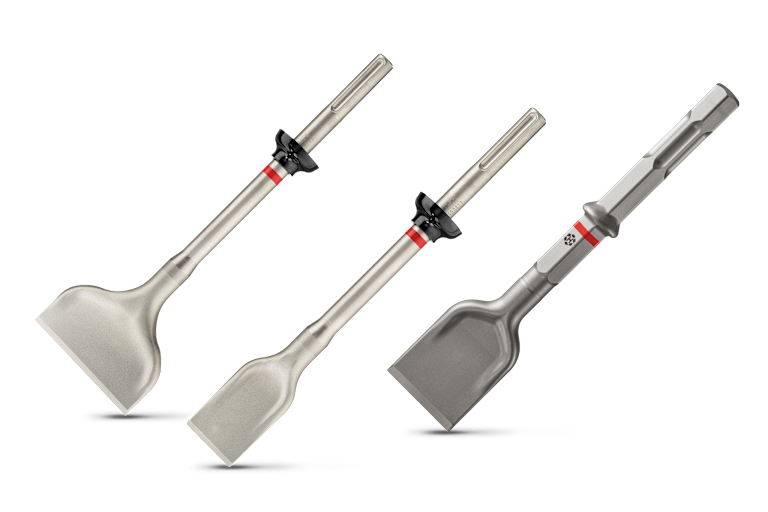
Need efficient concrete surface removal? Our Ultimate scaling chisels are built for scaling, removing excess concrete or seepage, and floor or wall channeling — with a polygon profile that helps keep the working edge flat for consistent results and long life.
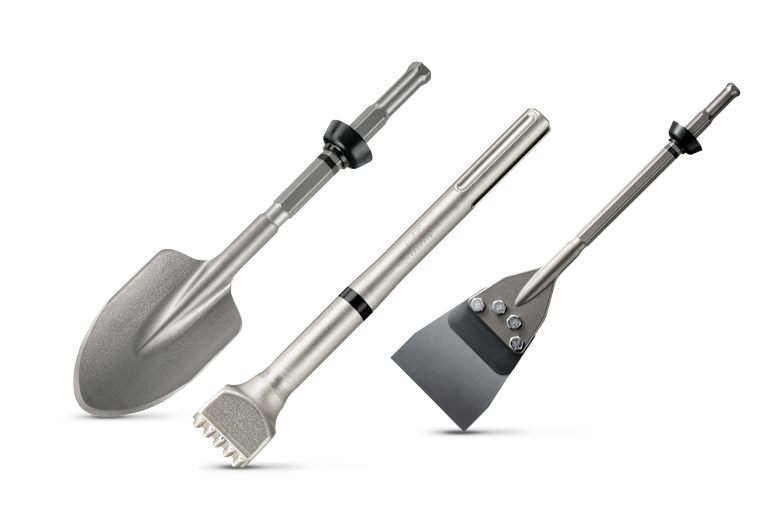
Some jobs don’t come up every day, but when they do, you still need the right chisel to get it done clean and fast. We’ve got options built for those tasks, so you can keep moving without missing a step.
Pick the chisel that fits the work—whether you’re roughening, smoothing, scraping, or driving rods. No guesswork, just the right tool for the job.
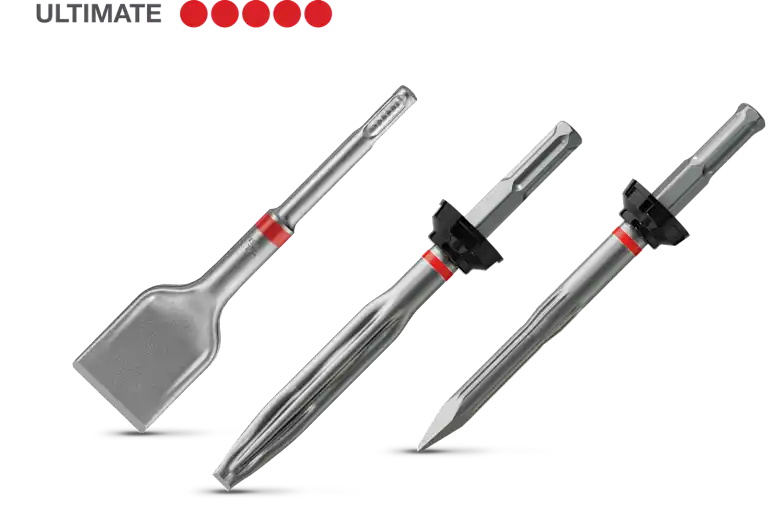
Optimized for Hilti breakers and demolition hammers to get the most out of your tool
Best choice for daily, heavy-duty breaking, chipping and scaling applications
Longest chisel life
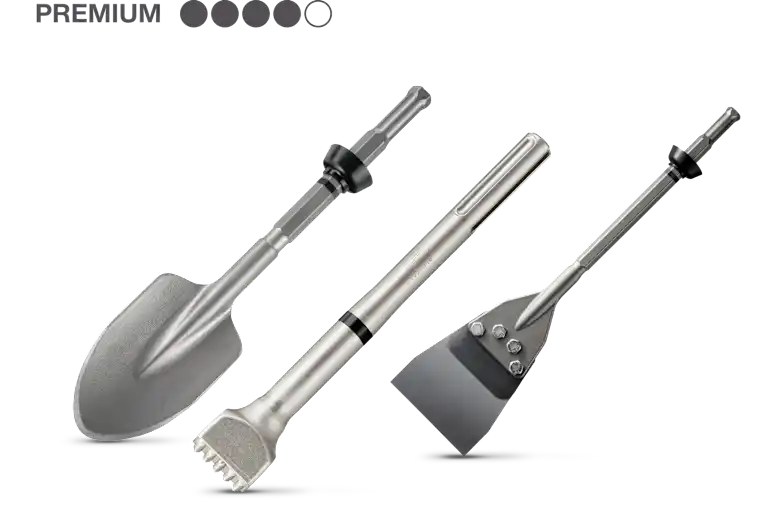
For a wide range of occasional jobs
Designed to perform reliably when used with Hilti tools
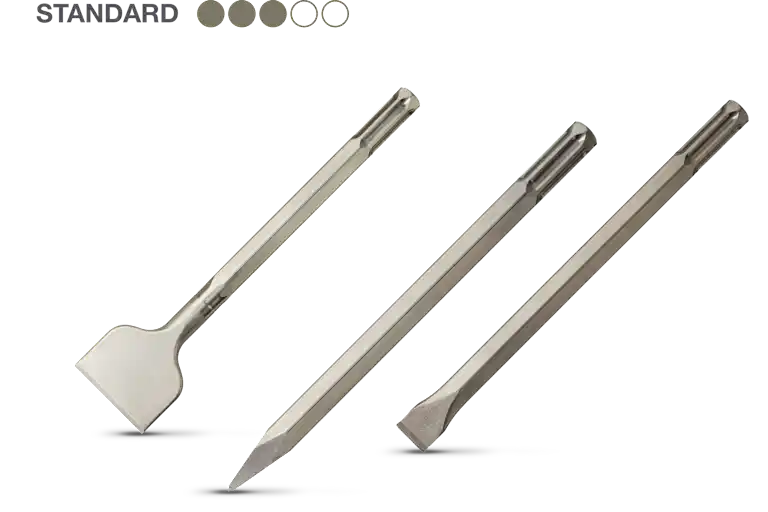
Smart backup for key applications when budget is tight
Built to keep your high-impact Hilti tools running reliably
Apart from sharpening (see below), technique is also important:
Let the tool do the work. Too much force increases wear without improving speed.
Do not use the chisel as a lever. This can bend or break the shank.
Apply steady, controlled pressure.
Rotate the chisel in the chuck when possible to ensure even wear.
We recommend always cleaning and greasing the connection end before inserting your chisel into the tool. This reduces heat and friction inside the chuck, helping to extend both the lifespan of the chisel and the tool.
The answer depends on the chisel type — because different chisels are designed to keep performance in different ways:
Ultimate FlatPoint chisels: No resharpening is needed and we don’t recommend it. With proper penetration (min. 2 in), the chisel keeps its functional working profile during use. The tip may look slightly dull after 1–2 hours — that’s normal. Polygon chisels break efficiently using their flanks/working profile, not a razor tip. Resharpening can reduce steel hardness and lead to higher wear, lower performance and shorter lifetime.
Ultimate BullPoint chisels: Can be resharpened on site with an angle grinder or belt grinder, with virtually no loss of performance (air‑hardened work profile).
Standard chisels: Can be resharpened by a professional (e.g., blacksmith) using proper forging and tempering. Typically 2–3 resharpenings before end of life.
For details, see the applicable chisel sharpening guideline. [link to Guideline when available]
Inductive hardening is a method to change the microstructure to achieve specific hardness values in different areas of the chisel. This enables proper robustness and avoids early breakages as well as offering highest wear resistance in the working zone and at the connection end. These areas are built to be very wear‑resistant, while the inside of the chisel has a softer core and is designed to stay more flexible.
That balance matters. A hard surface helps slow down wear and mushrooming, while a softer core helps the chisel handle repeated impacts without cracking or snapping. The goal is a chisel that holds its shape under load without becoming brittle.
The connection end is where all the impact energy from the tool enters the chisel. Hilti chisels use hardened, slightly convex connection ends to help transfer that energy efficiently into the chisel body.
This shape also helps spread loads more evenly inside the tool chuck. That reduces local wear and helps protect the interface between tool and insert, which supports more consistent performance over time.
The focus is on both extending chisel life and keeping performance stable across the whole tool‑and‑insert setup
Yes, but only with the right type of hammer drill.
Rotary (combi) hammers with a chisel‑only mode can be used for light chiseling tasks such as surface removal, small channels, or breaking thin concrete. When used with the correct SDS chisel, they offer good control for precise work.
For heavier chiseling, breaching, or continuous demolition, we recommend using a dedicated demolition hammer.
No. BullPoint chisels are designed for surface chipping and rebar exposure, where concrete is removed layer by layer. Their straight, sharp tip can be resharpened on site (e.g. with an angle or belt grinder) and is built to stand up to frequent contact with rebar. FlatPoint (polygon) chisels, by contrast, are designed for breaching — driven into concrete to help create cracks quickly for fast, controlled breaking.
*Based on internal testing with:
TE 1000-22, B22-290 battery, and TE-SX FlatPoint chisel. Testing was conducted using non-reinforced concrete slabs measuring approximately 32" × 20" × 8". Actual performance will vary based on jobsite conditions, material properties, temperature, humidity, dust levels, and operating technique.
