
Hello,
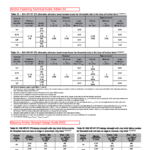
I’m working on an existing brick building from the 1940s and need to design some anchors connecting to the face of a two-wythe brick wall (8" thick). I’m looking at the tension and shear values from the Anchor Fastening Technical Guide, Edition 22 and the Masonry Anchor Strength Design Guide 2025. The values from the Technical Guide are much higher than the Design Guide. See attached snapshots of the two guides.
I’m trying to figure out why the values are much lower in the 2025 Design Guide. Conservatively, we are going with the lower values; but I want to understand if me comparing these sets of tables is even correct (meaning am I comparing apples to apples). Your help is greatly appreciated.
Thanks,
Fidencio
Hello Fidencio,
Thank you for reaching out. The greatest difference between the HIT-HY 270 tables mentioned in the Anchor Fastening Technical Guide and the Masonry Anchor Strength Design Guide is their associated design method and corresponding testing criteria. This transition is due to significant revisions made to Acceptance Criteria AC58 for Adhesive Anchors into Cracked and Uncracked Masonry. Additional information can be found in the following AskHilti article.
The Anchor Fastening Technical Guide includes allowable loads, which follows an ASD design method.
The Masonry Anchor Strength Design Guide includes design strengths, which follows an LRFD design method.
Hilti also has an article discussing installation of HIT-HY 270 into older, solid clay bricks with a minimum 45-psi mortar shear strength for two-wythe conditions following the ASD method that may be of interest. Please see this article for more.
I hope this helps. Please reach out to hnatechnicalservices@hilti.com with any additional questions.
Kind regards,
Sinan